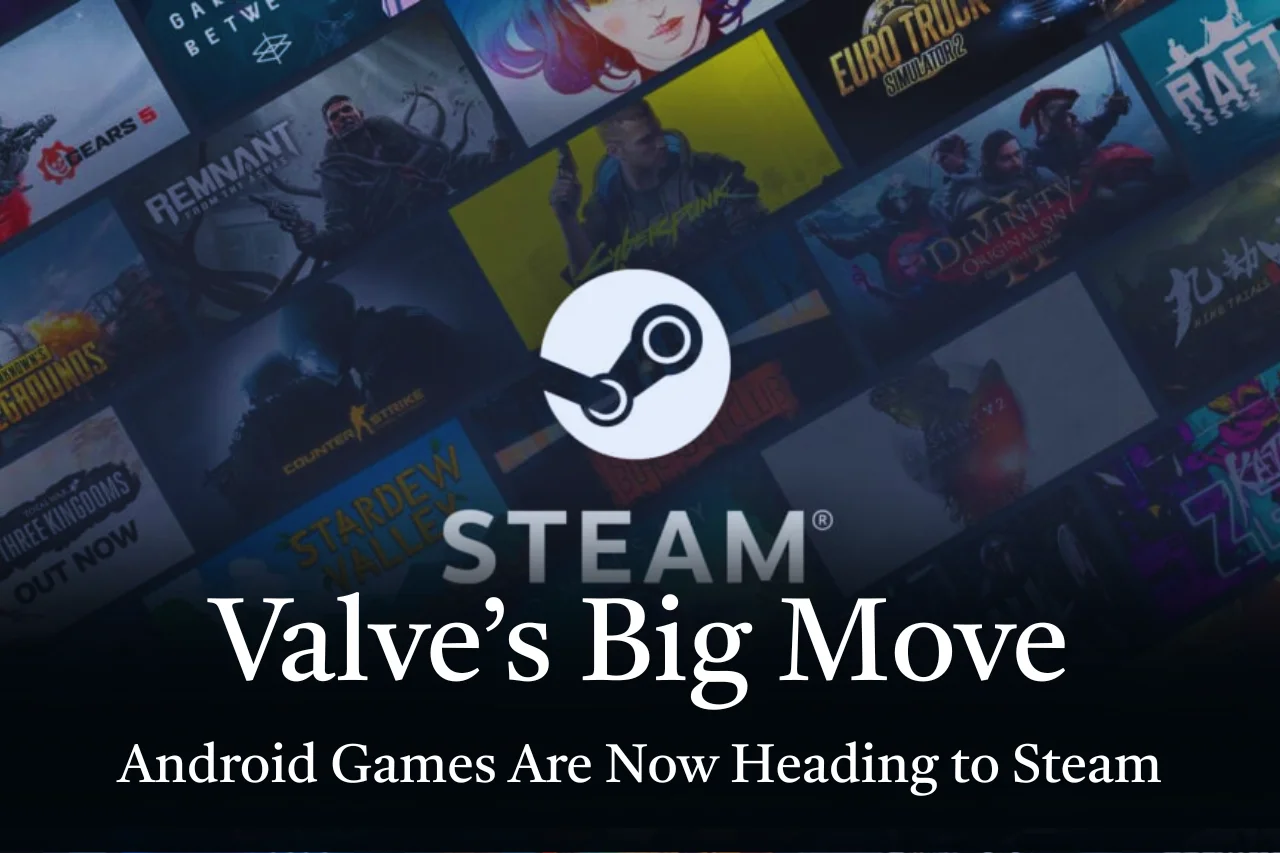
In a bold move that could reshuffle the gaming landscape, Valve Corporation has announced that it will now support Android games on its flagship platform, Steam. This isn’t just a minor update it’s a signal that Valve is ready to blur the lines between mobile, PC and console gaming. Let’s unpack what this means, why it matters for developers and players alike, and what potential pitfalls lie ahead – all from a UK-based perspective.
What’s the announcement?
Earlier this week, Valve declared that Android-based games (and Android VR applications) will be allowed into the Steam catalogue.
Developers will be able to use their existing Android APKs, including those built for VR headsets like the Meta Quest series, to publish on Steam.
The launch is closely tied to a new piece of hardware: the forthcoming Steam Frame VR headset (an ARM-based Qualcomm Snapdragon device) which will run SteamOS and natively support Android games without needing extensive porting.
Valve emphasises that from a user’s viewpoint the experience should feel seamless: download from Steam, hit play, no thinking about “Is this an Android game or a PC game?” required.
In short: mobile devs (especially VR mobile devs) are being welcomed into the PC/Steam ecosystem.
Why this matters (especially for UK/European market)
1. Broader audience, more catalogue
Steam has long been the go-to platform for PC gamers in the UK and Europe. By opening its doors to Android games, Valve is massively expanding its potential catalogue. For players this could mean discovering mobile games in a familiar desktop storefront, and for developers it offers a route from mobile to “big screen” gaming.
2. Developer workflow simplified
Many mobile/VR devs already build Android APKs for Meta Quest or similar. Valve’s approach means they don’t necessarily need to completely retool their game for PC the same APK can be brought over.
3. Hardware and architecture shift
In the UK, many gamers use Windows PCs (x86 architecture). Valve’s new devices (including the ARM-based Steam Frame) hint at a future where ARM architecture matters in gaming. With SteamOS supporting ARM and Android games natively, the distinction between mobile vs PCLooking ahead, this announcement could mark the beginning of several shifts:
begins to fade.
4. A response to the mobile gaming boom
The mobile market has exploded. By inviting Android titles, Valve is acknowledging the scale and value of mobile gaming and looking to merge it into its ecosystem rather than remain separate.
What are the British gamers and developers likely to see?
As a UK gamer or developer you might expect:
More variety on Steam: Titles that began life as mobile games could appear on Steam, either updated for PC or running via compatibility.
Cross-device play: Mobile/VR games already built for Android might appear alongside typical PC titles, possibly enabling shared saves, controllers and so on.
New hardware interest: If you’re considering hardware upgrades or new devices, Valve’s ARM/Android strategy may bring refreshing alternatives to the traditional Windows/x86 gaming PC or console.
Pricing and store dynamics: UK pricing, tax, region-specific offers – we’ll need to monitor how Android game pricing translates when they hit Steam in the UK.
The challenge and caution flags
Despite the exciting prospects, several caveats apply.
Performance and experience gap
Even though Android APKs can run natively on ARM hardware, the PC market (especially in the UK) contains many x86-based machines. Valve will rely on compatibility layers such as Proton, and for Android apps on x86, some emulation or porting may still be required.
Moreover, UI and input considerations matter: mobile games often assume touchscreen, short sessions; PC/Steam games assume keyboard/mouse or controller, longer play. Adapting the UX may still fall on the developer.
Curation and quality control
Steam has a vast library and already suffers from catalogue overload. By accepting Android games en masse, the challenge of ensuring quality titles and avoiding dumping low-effort ports will grow.
Region and digital store issues
In the UK/Europe, regulatory and store-front issues are evolving (for instance with sideloading and alternative app stores on Android). Valve’s move may raise questions: will some Android games on Steam use in-app-purchase models designed for mobile? Will regional compliance need careful handling?
Hardware fragmentation
For developers, supporting Android + PC + possibly new Valve hardware is more complexity. Even if the APK works, optimising for big screens, for controllers, for high resolution will take work.
What does this mean long-term?
Looking ahead, this announcement could mark the beginning of several shifts:
Platform convergence: The divide between mobile, PC and console might shrink. A game might be developed once (Android) and run everywhere via Steam.
ARM dominance grows: With Valve investing in ARM devices (Steam Frame) and Android compatibility, ARM architecture may become more mainstream in gaming hardware in the UK.
Store ecosystems evolve: Developers may bypass traditional mobile app stores (e.g., Google Play) and use Steam instead. This opens questions about revenue shares, region-specific regulation, and discoverability.
User choice increases: Gamers in the UK will have more options – Android games in PC store, VR titles easily accessible, cross-platform play. A win if execution is strong.
Final thoughts
For UK gamers and developers, Valve’s decision to welcome Android games onto Steam is promising. It signals an ecosystem shift – one where mobile and PC gaming no longer live in entirely separate silos. The potential for more games, more choice, and hardware innovation is real.
However, the success of this move depends on execution: quality, optimisation, regional pricing/regulation, and user experience all matter. If Valve and developers handle those well, we could be seeing the start of a more unified gaming landscape — one where whether you’re on your phone, your laptop, your VR headset, or your living-room setup, you’re in the same catalogue, the same community.
We’ll have to keep an eye on how many high-profile Android titles make the leap, how Steam treats them in terms of promotion and support, and how UK gamers respond. If you like, I can pull together a list of likely Android games that may come to Steam first — would you like that?
Leave a Reply