
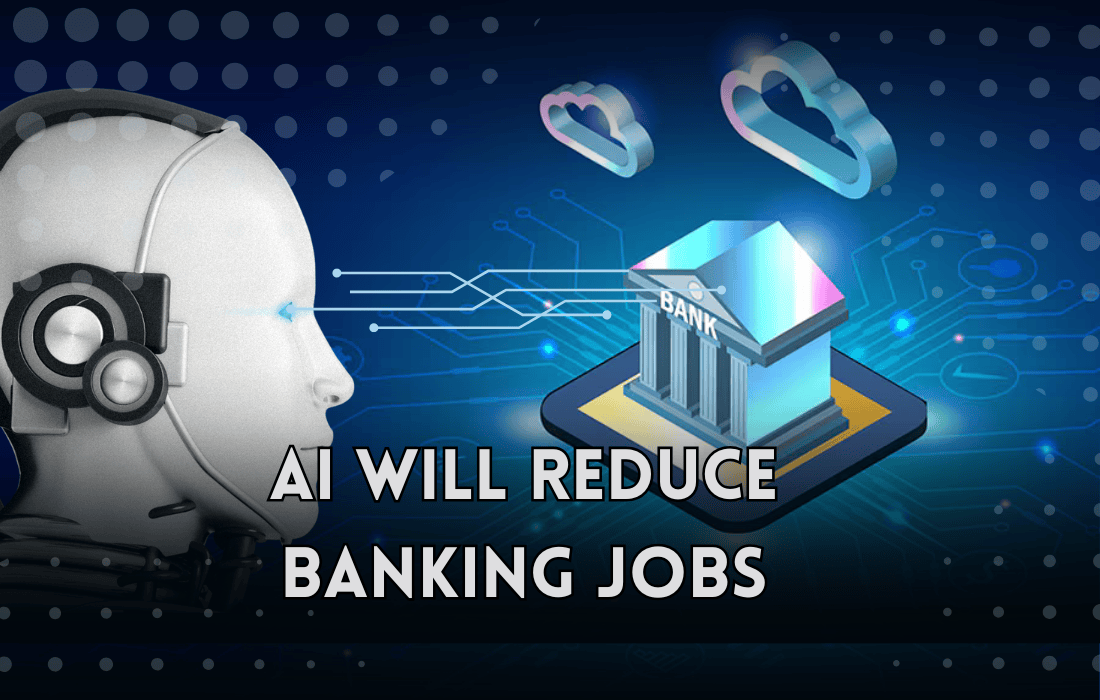
AI Will Reduce Banking Jobs By 2 Lakh In The Next 5 Years
The Rise of AI in Banking
Man proposes that artificial intelligence (AI) is consuming the globe and it has reached all the industries including the banking industry. Later, it is both in transforming simple operations and in improving the customer experience that AI will play a key role. However, it has its implications on job losses where estimates show that up to 200,000 banking jobs could be at risk in the coming five years.
Change of Banking Jobs Due to Artificial Intelligence
Examples of AIP are Machine learning, natural language processing, and Robotic process automation (RPA) are used daily in call centers, data generation, customer service inquiries, and fraud detection among others. This trend may in turn provide efficiency and cut cost in the undertaking of its services for the benefits of banks, this may however call for a replacement of some human tasks by the automated systems.
Employment Risks and Skills Requirements
Although AI might displace individuals performing low-skilled work, it also suggested that new jobs would also be generated, though they would require extra skills. For instance, the trend will rise in the demand for artificial intelligence specialists, data scientists, and cybersecurity experts. As such, there is a new need to train banks and their employees to adapt to this new consumer base and new technological inventions on the market.
AI and its Benefits
It also offers good potential in helping banks improve services for customers as well as their overall experience. For instance, customer support can be maintained by Intelligent Chatbots, while recommendation technologies ensure better financial decisions to be made by customers. Also, through analysis of risks, AI assists in avoiding the emergence of new failures and helps banks become more ready for the crises.
Championing the New Age Banking
Nowadays, AI is still becoming even more popular and advanced and that is why banking should not disregard this technology. This depends on developing technology through the procurement of artificial intelligent solutions and training the staff with relevant skills and, where necessary, providing job transition for individuals impacted by automation. If done correctly, therefore, and with executives taking on board the issues highlighted above and embracing the opportunities outlined below while at the same time avoiding the pitfalls, banks can steer a successful course through this new technological age.
Conclusion
AI has made and is still making tremendous changes within the banking sector. Short-term implications of such an outcome are negative, as it results in job elimination, yet the opportunities for innovation are vast. In this case, the banks are therefore advised to approach AI responsibly together with adequate preparation for its future to enhance the chances of the new move for success and contend with its purpose of effectively fulfilling its acknowledged function or task to the customers.
Leave a Reply