
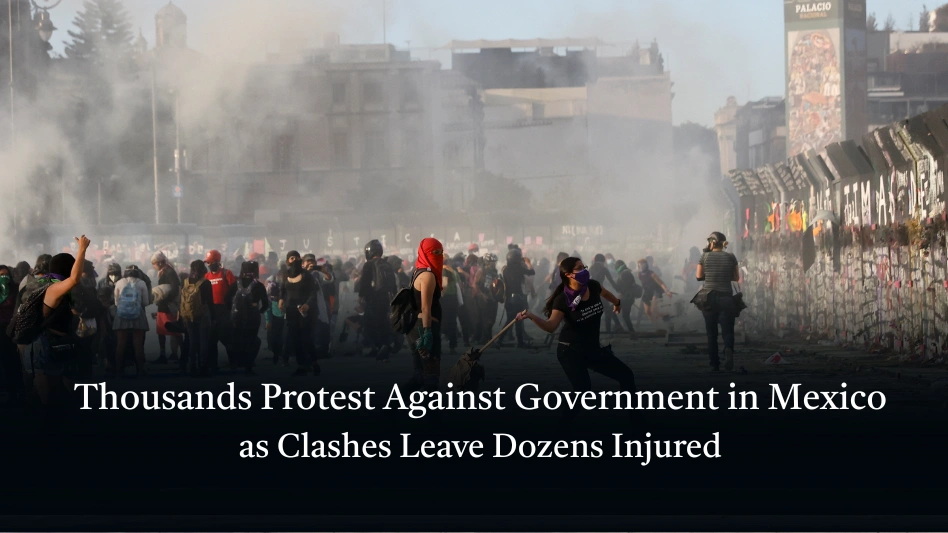
In Mexico City, tensions have boiled over. Thousands of protesters recently flooded the capital’s streets to voice anger against the government, citing rampant violence, corruption, and institutional impunity. While the demonstrations began as largely peaceful, they escalated into clashes with security forces drawing global attention and raising serious questions about Mexico’s political stability.
This wave of unrest is being called a Generation Z protest, and it has sparked not only national outrage but also international concern. Let’s break down what’s happening in Mexico, why people are protesting, what unfolded in the Mexico City protests, and what it could mean moving forward.
What Sparked the Protests: Crime, Corruption & a Mayor’s Murder
At the heart of the current unrest lies a potent mix of public frustration. According to multiple reports, the mass demonstrations were catalyzed by the assassination of Uruapan Mayor Carlos Manzo, a voca anti-crime figure, which has ignited fury over the government’s perceived failure to curb cartel violence. (Wikipedia)
Organized by youth-led movements dubbed Generation Z Mexico, the protests have tapped into a broader well of discontent. Young people in Mexico, increasingly vocal on social media, are demanding action from President Claudia Sheinbaum’s administration on issues of crime, corruption, and accountability. (UPI)
The Mexico City Protests: From Social Media to the Streets
A Youth-Driven Movement With Broader Backing
What began as a grassroots call on X (formerly Twitter) and other platforms caught fire. The movement, though youth branded, pulled in participants from multiple generations, with older critics of the government joining forces with young activists.
These protesters used powerful symbolism. Many carried straw hats, a tribute to the late Mayor Manzo, and waved banners that read “We are all Carlos Manzo.(Apa.az) Their message was clear: enough is enough.
March to the National Palace & Violent Clashes
The demonstration’s focal point as the Zócalo, Mexico City’s massive central square, where protesters confronted security forces near the National Palace, the seat of political power in Mxico. According to reports, a smaller subset of hooded demonstrators managed to dismantle parts of a barrier protecting the Palace. (Al Jazeera)
In response, police deployed tear gas. According to government sources and eyewitnesses, clashes turned physical: officers reportedly chased protesters through the squre, chased them out, and beat some individuals. (Al Jazeera) Public Safety Secretary Pablo Vázquez confirmed that around 120 people were injured — including both law enforcement officers and civilians. (The Economic Times)
Root Causes: Why People Are Protesting
These aren’t just spontaneous demonstrations — they stem from deep-rooted frustrations:
Escalating Cartel Violence
The killing of Mayor Manzo, a hardline anti-crime politician, underscores how emboldened organized crime has become. Many protesters see his murder asemblematic of systemic violence and impunity in Mexico. (Apa.az)
Government Accountability
Protesters accuse the Sheinbaum administration of failing to protect civic leaders and control criminal networks. Calls echo for reforms and stronger institutional accountability.
Youth Activism & Gen Z Mobilization
Gen Z’s role is central this generation has grown up in a digital age and is using online tools to amplify their anger and organize. (The Economic Times) Their allying cry isn’t just about violence; it’s about reshaping the political culture in Mexico.
Government’s Reaction & Controversy
Accusations of External Manipulation
The government hasn’t taken the protests lightly. President Sheinbaum and her administration have suggested that behind the youth-led movement lies a paid disinformation campaign, managed by political opponents and automated accounts on social media. (UPI) In other words, officials argue the protests are not entirely organic.
Official Response & Crackdown
Some in the government defend the use of force. According to Mexican authorities, police were responding to structural breaches around the National Palace justfying tear gas and dispersal tactics. (Apa.az)
With dozens wounded, the situation looks tense what began as grassroots discontent has escalated into a major political confrontation.
A Broader Context: Previous Unrest in Mexico City
To fully understand the current wave, it helps to look at Mexico’s recent history of protests:
Gentrification Protests: Earlier in 2025, residents of Mexico City — especially in neighborhoods like Roma and Condesa marched to decry rising housing costs fueled by short-term rentals and “digital nomads.” (Los Angeles Times) At times, the protests turned violent, with storefronts vandalized and anti-American slogans posted. (Los Angeles Times)
Anti-Corruption / Judicial Protests: In past years, judicial workers and citizens have also mobilized against proposed reforms they viewed as undermining the independence of Mexican courts. (India Today)
The current unrest builds on these earlier movements, but with a sharper youth-led edge and a more urgent call for national-scale change.
Why This Matters Especially to International Observers & the U.S.
From a U.S. perspective, what’s happeing in Mexico City isn’t just a domestic issue it’s deeply relevant:
Regional Stability & Security
Persistent violence and weak rule of law in Mexico have ripple effects. The U.S. monitors hese developments closely, as increased instability could impact migration flows, drug trafficking, and bilateral cooperation.
Generation Z’s Political Influence
The fact that a Gen Z-led protest has gained such traction suggests a generational shift in political engagement. These young protesters are refusing to accept the status quo a potential signal for future elections and policy change.
Social Media’s Role
This movement shows how socil media can be a double-edged sword. While it can empower organizers and spread protest calls rapidly, it also raises questions about disinformation, manipulation, and foreign influence conerns that resonate strongly in U.S. political discourse
Gentrification & Global Inequality
The housing protests earlier ths year reflect a global trend: rising rents, speculative investing, and the displacement of locals. In Mexico City, many of the protesters directly point to Americans and foreign digital nomads making this a bi-national issue, not just a local one. (Los Angeles Times)
Risks, Opportunities & What Could Happen Next
Risks
Escalation: If protests continue to turn violent, the government could ramp up its crackdown. That riks more injuries, arrests, and possibly further radicalization.
Polarization: Accusations of disinformation or foreign-backed influence could deepen divisions between youth activists and political elites.
Economic Fallout: Prolonged unrest in Mexico City could affect investment, tourism, and local economic activity.
Opportunities
Reform Momentum: The protestsmight be a turning point. If well-directed, they could force real political reforms from anti-corruption measures to improved public safety.
Youth Engagement: This could be the beginning of a more politically engaged Generation Z in Mexico one that demands accountability and change.
Policy Shifts on Crime: National leaders may respond with tougher or more transparent policies around cartel violence, policing, and justice.
Voices From the Streets
Some of the most powerful images from the protests come from generational crossovers:
A 29-year-old business consultant marched with a pirate skull flag, saying, “We need more security.” (Al Jazeera)
A 43-year-old doctor lamented how public health workers feel unsafe in a country whereviolence is pervasive. (Al Jazeera)
Others called out online blasting, claimng that not all discontent is being organized by outsiders some is deeply personal and homegrown.
What Comes Next for Mexico City & the Future of Protests
Watch for Dialogue
Will the administration opn channels for dialogue? If not, protests might intensify.
Protest Strategies
New protests may be more organized, especially if youth leaders push for systemic refoms (not just symbolic actions).
Political Impact
The movement could reshape local and national politics, influencing future legislative priorities and election dynamics.
Global Reaction
Foreign observers including in the U.S. will likely keep a close eye, especially on how the government resonds to these demands.
Final Thoughts
The recent Mexico City protests are not just another headline — they could mark the start of a watershed moment for Mexican politics. What began as a youth-driven march in reponse to escalating crime has evolved into a broader movement calling out impunity, political inertia, and institutional failure.
For those in the U.S. whether policymakers, activists, or average observers this matters deeply. The issues fueling outrage in Mexico City resonate globally the fight for justice, the ole of young people in politics, and the struggle to hold governments accountable.
As Mexico grapples with these protests, one thing is clear Generation Z is no longer just a demogrphic label. For many, it’s now a political force demanding real change.
Leave a Reply