
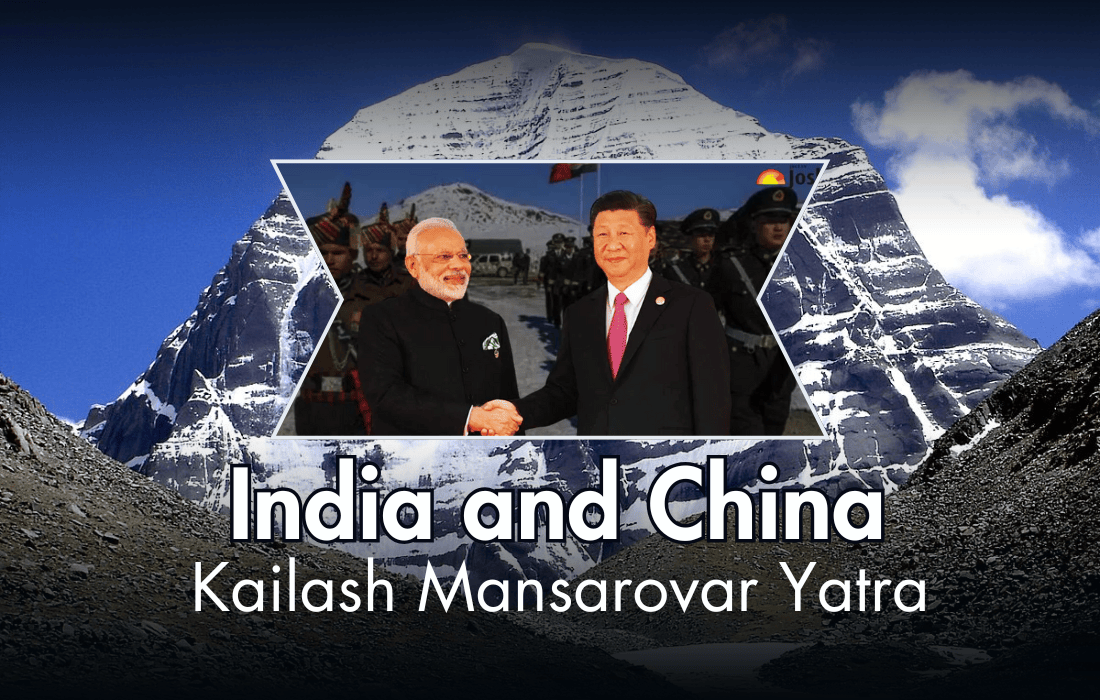
India and China Agree to Resume Direct Flights and Kailash Mansarovar Yatra
Introduction:
Both nations united to restore their diplomatic links through relinking direct flights plus reopening the popular Kailash Mansarovar Yatra pilgrimage route. Weakening international discussions between the two nations established the conditions for reinstituting direct flights which both governments predict will boost tourism and connect citizens.
A Significant step Towards improving Bilateral Ties
Both India and China made an important move by starting direct commercial flights when they cleared the long-standing five-year interruption in air services. The decision to restore direct flights stands alongside Kailash Mansarovar Yatra resumption as a sign of intensified bilateral efforts to foster better people contacts and enhance their total relations.
Key Takeaways:
Direct Flights Resumed:
The suspension of direct air service between India and China occurred after the COVID-19 pandemic together with political tensions in the region. Regular transit service between both countries through flights will enable business operations together with tourism and cultural rituals.
Kailash Mansarovar Yatra to Resume:
The worshipping journey to Tibet’s Kailash Mansarovar sacred territory will resume following its suspension in recent times. Indian pilgrims will regain their ability to embark on the spiritually meaningful journey because of these efforts.
Enhanced People-to-People Exchanges:
The nations have worked together to create procedures which support expanded direct engagement between their populations through think-tanks and media platforms. This effort will establish common perception between parties and createourcing the foundation for trust development.
Implications:
Economic Benefits:
Direct flights between the countries will generate multiple positive economic effects through increased trade activity while spurring tourism growth and new investment opportunities.
Cultural Exchange:
Intensified contact among individuals from both civilizations drives better cultural knowledge and supports deeper ties between civilizations.
Improved Bilateral Relations:
Theseارتifacts represent constructive developments in bilateral relations after years which presented challenges for comprehensive cooperation.
A Step Forward in Bilateral Relations
Transparent flight connections between India and China demonstrate improvement in their bilateral relationship through enhanced cooperation and improved connectivity. Direct air transportation closures between the two nations due to worldwide disruptions will be replaced by this development leading to enhanced trade travel and tourism activities.
Pilgrims experience great joy because the Kailash Mansarovar Yatra recently reopened. Multiple religious traditions of Hindus, Buddhists, Jains and Bon immigrants value Mount Kailash as their primary sacred place because of its special religious value.
Significance of Kailash Mansarovar Yatra
Hundreds of thousands of devotees annually complete a holy pilgrimage to see Mount Kailash and Lake Mansarovar situated in the Tibet Autonomous Region of China. In Hindu tradition Mount Kailash serves as the sanctified residence of Lord Shiva but various ancient religious texts identify this peak as the cosmic center of the world. Orderly thousands of believers make their pilgrimage annually which connects them with inner spirituality throughout the stunning landscape.
Uncounted believers embark on this sacred journey which combines deep spiritual belief with substantial physical challenges that stretch through demanding topography and lofty elevation. Yearly reopening of the yatra enables believers to restore their connection with both spiritual beliefs and cultural roots.
Ease of Travel and Improved Connectivity
Indian pilgrims benefit from the reinstated direct flight service between India and China when traveling to perform the Kailash Mansarovar Yatra. Improved connectivity enables travelers to achieve a shorter transit to Tibet through easier access that lowers travel barriers experienced before.
By implementing this measure businesses and tourists will experience improved cultural exchanges together with stronger economic bonds between the nations.
Enhancing Cultural and Religious Bonds
Opening Kailash Mansarovar Yatra to pilgrims marks a dual accomplishment between states together with its true value as a ceremonial homage to mutual cultural heritage. Throughout centuries this holy travel path has built lasting ties between China and India by establishing deep mutual goodwill between their civilizations.
Through their sponsorship of pilgrimage activities both nations recognize these traditions hold substantial value for preservation. Future bilateral relations are expected to grow stronger due to this development which will advance personal connections among citizens.
Challenges and Opportunities
To provide secure journey conditions and convenience to pilgrims both governments must work together through meticulous planning. The safe and enjoyable journey of travelers requires infrastructure development together with accessible healthcare facilities and reliable communication systems.
The new potential for collaboration creates more ways India and China can build their relationships beyond travel through tourism and trade and cultural programs.
Conclusion:
India-China relations continue to move forward positively as direct flights begin operation and the Kailash Mansarovar Yatra releases its operational restrictions. Both countries believe in growing cultural bonds through spiritual dedication while creating new commercial potential for travel activities.
Leave a Reply